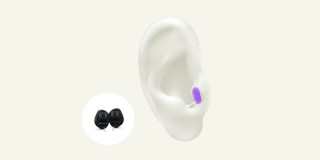
IIC - INVISIBLE IN THE CANAL
IIC will be your little secret. Enjoy the comfort of a custom fit without sacrificing sound. With invisible hearing aids, you get to decide when your ears are the topic of conversation.
Are the IIC hearing aids the right choice for you?
Full range of sound with half the visibility
Most suitable for mild and moderate hearing loss.
Invisible-in-the-canal hearing aids, also called IIC, sit snuggly in the lower portion of the outer ear.
Tailor-made to your ear's shape, the design is extremely discreet, yet large enough to contain all of the powerful features you need. You can enjoy a full range of sounds with a barely-there appearance.
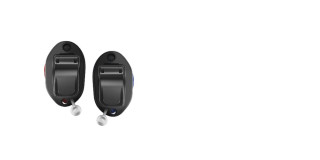
UNBELIEVABLY TINY
Can hardly be seen when you wear them.

Benefits - invisible in the canal hearing aids
Advantages
IIC (Invisible-in-Canal) hearing aids offer exceptional discretion with their nearly invisible design.
Their deep placement in the ear canal enhances natural sound localisation and reduces wind noise. Lightweight and comfortable, they provide a subtle and convenient hearing solution.
- More discreet compared to larger models
- Custom-fit for individual ear canals, providing comfort
- Suitable for mild to moderately severe hearing loss
- Often include advanced features like wireless streaming
- Some are barely visible when worn
Drawbacks - invisible in the canal hearing aids
Disadvantages
Because it is so incredible tiny there is a limit to the amount of space there is for extensive amount of features. This limits the amount of amplification they can provide.
It can also be a bit fiddly to handle but they come in rechargeable options, for these you do not have to struggle with the handling of small batteries.
- Smaller size means smaller batteries, leading to shorter battery life
- Can be prone to earwax clogging
- May be challenging for users with dexterity issues to handle
- Not usually recommended for severe or profound hearing loss
- Feedback can be an issue due to proximity to the ear drum
Invisible-in-the-canal hearing aids: FAQ
IIC stands for invisible-in-the-canal hearing aids. These hearing devices sit in the lower portion of the outer ear, providing a high-quality sound with a discreet look. They are custom fit to the form of the user's ear and house the microphone, amplifier and speaker in the shell of the hearing aid.
Yes, invisible-in-the-canal hearing aids function well for varying degrees of hearing loss. In-the-canal, or ITC, hearing aids pull in sound from the environment through a microphone. These are turned into electrical signals, amplified and then sent to the user through a speaker. Since the hearing aids sit snuggly in the outer ear, they are discreet while still providing a clear, high-quality sound for the user.
IIC hearing aids sit in the lower portion of the outer ear. This makes them more discreet than behind-the-ear designs, but easier to insert and remove than those placed deep inside the ear canal. The shell of the IIC makes room for a bigger battery and powerful features. Due to their placement, however, they are more prone to collecting earwax and, therefore, have increased need for repair. This makes a proper cleaning and maintenance routine essential. Since the microphone and receiver are in close quarters, if the device isn't properly fitted or gets knocked out of place, it can also lead to an unpleasant, high-pitched noise called feedback.
While invisible-in-the-canal (IIC) hearing aids fit into the lower part of the outer ear, completely-in-the-canal (CIC) hearing aids have a much smaller design, fitting deep inside the ear canal. CIC hearing aids are almost completely invisible, while IIC hearing aids are slightly larger and visible to onlookers.
With a small design that contains leading technology, the price of an IIC hearing aid will vary depending on features and brand. An approximate price for in-the-canal hearing aid can range anywhere from $1,000 to $6,000.
Get help finding your type
Which type of hearing aid is right for you?
Choosing hearing aids involves considering various factors, including your level of hearing loss, ear size and shape, budget, preferred features, and stylistic preferences.
Your ideal choice may not align with your initial preferences, as factors like profound hearing loss or small ear canals may limit certain options.
Consulting with a hearing care expert during a store visit, where a full hearing test and consultation are conducted, will help you identify suitable types based on your needs and preferences. From there, you can explore different brands and models to find the right fit within your budget with the desired features.